
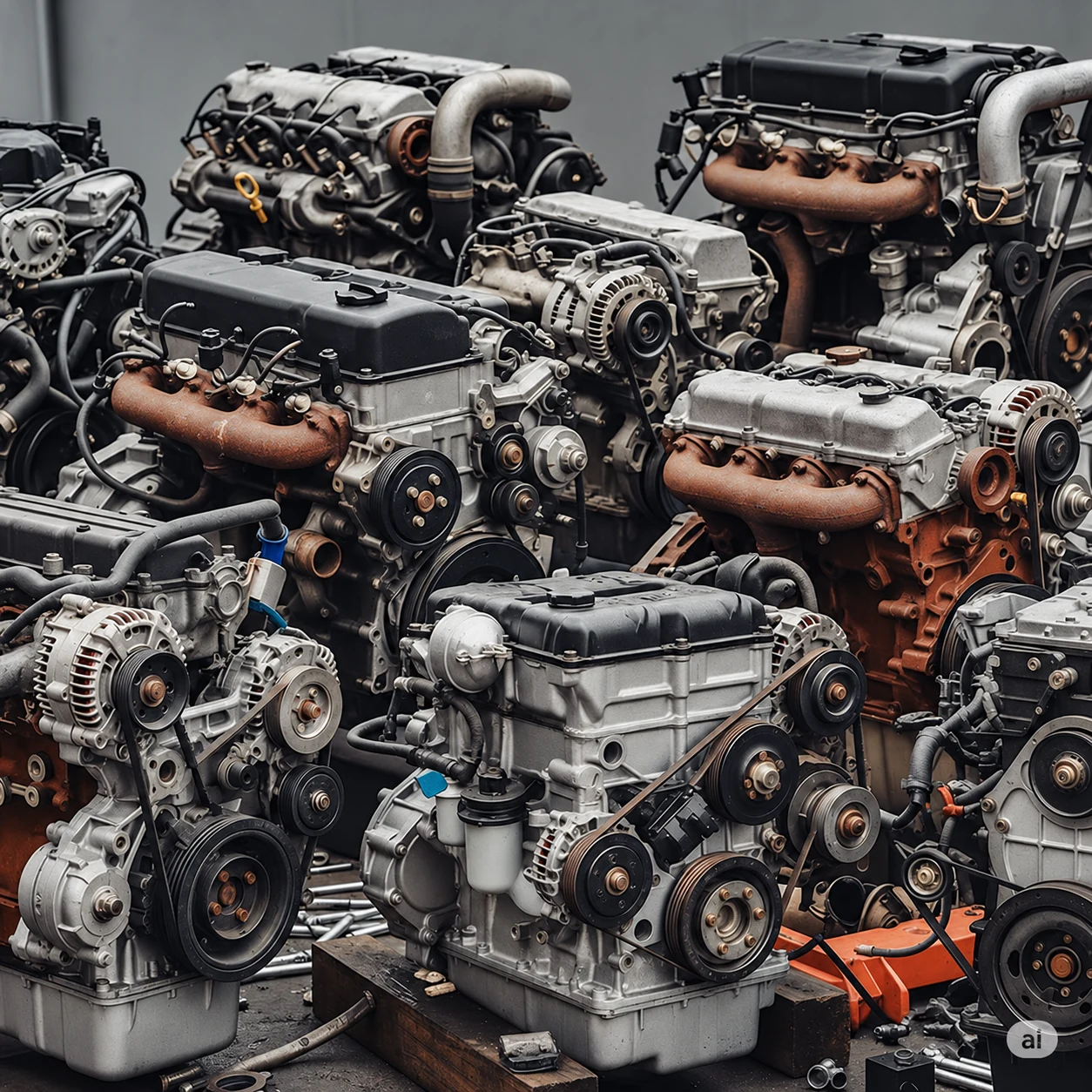
For a road car on standard engine hardware, BSG's shortlist starts with the VW Group EA888 Gen 3 2.0 TSI/TFSI, BMW B58, Audi's supercharged EA837 3.0 TFSI and Mercedes' M276 twin-turbo V6. BMW's 3.0-litre N57 and B57 diesels also deserve a clear place on the list, alongside selected EA288, B47, OM651 and OM642 applications.
These are recommendations to consider, not approval to tune every car carrying the badge. The exact engine, gearbox, fuel and condition determine whether a remap makes sense. A healthy, well-maintained example with a modest calibration is a better starting point than a neglected car promising a bigger gain.
What makes an engine worth remapping?
An engine control unit, or ECU, manages how the engine operates. A remap changes parts of its calibration: the instructions used to control functions such as fuelling, ignition and boost. It does not repair worn components or add the cooling capacity of a different model.
Turbocharged engines often offer more scope because the calibration can change how much air the turbo supplies, alongside the fuel needed to burn it. Most naturally aspirated engines have less scope for a substantial software-only increase. Our guide to how turbochargers work explains the underlying airflow.
We recommend considering engines with clearly identified variants, developed calibration support and a suitable drivetrain. The useful result is stronger, controlled performance through the rev range you actually use. A sharper accelerator pedal alone does not prove that the engine makes more power.
“Stage 1” commonly describes a calibration for standard engine hardware, but stage names are not universal specifications. Ask what the proposed work includes, what fuel it needs and how the result will be checked.
BSG's engine shortlist
This table groups our recommendations by purpose. It is not a ranking of failure rates, and the example cars are starting points for identification rather than a compatibility list.
| Engine family | Example cars to investigate | Where it fits our shortlist |
|---|---|---|
| EA888 Gen 3 2.0 TSI/TFSI | Golf GTI/R Mk7 and Mk7.5; Audi S3 8V; Octavia vRS Mk3 petrol | Everyday petrol performance, with separate turbo and gearbox configurations |
| BMW B58 3.0 turbo petrol | F20/F21 M140i; F22 M240i; F30/F31 340i; F32/F36 440i | Six-cylinder petrol performance |
| Audi EA837 3.0 TFSI supercharged | S4 B8/B8.5 and verified supercharged S5 variants | An established alternative to a turbo petrol six |
| Mercedes M276 3.0 twin-turbo petrol | W205 C400, C450 and V6 C43 variants | Everyday Mercedes petrol performance |
| EA288 2.0 TDI; BMW B47 2.0 diesel | Verified Golf Mk7/A3 8V TDI and B47-powered 320d variants | Mainstream diesel daily drivers |
| BMW N57 3.0 diesel | Verified F30/F31 330d and appropriate 530d applications | A six-cylinder diesel daily driver; different turbo versions require separate targets |
| BMW B57 3.0 diesel | Verified G20/G21 330d and appropriate G30 530d applications | A newer six-cylinder diesel option, subject to ECU access and exact specification |
| Audi 3.0 TDI; Mercedes OM642 | Verified Audi V6 TDI and W212 E350 diesel variants | Larger diesel cars, with condition central to the decision |
| Mercedes OM651 2.1 diesel | Verified W204 C250 CDI and related OM651 applications | A moderate remap on a suitable existing diesel |
| Range Rover 5.0 Supercharged petrol V8 | Verified Range Rover and Range Rover Sport applications | A performance SUV project with appropriate running and maintenance budgets |
The sections below explain the distinctions that matter. B48, Audi EA839 and Mercedes M177 engines also merit consideration, but none should be selected from an engine-family name alone.
What gains are realistic?
Start with a specific version, rather than applying one percentage to an engine family. The published examples below show the scale of a proposed initial ECU remap. They exclude upgraded-turbo and supercharger-pulley packages, and they do not depend on recommending emissions removal.
These are supplier benchmarks, not measured BSG results or promises for your car. The original and modified values come from the same supplier. A lower torque target may be appropriate for the individual drivetrain. Where a source gives a range, fuel, settings and conditions affect the result.
PS is metric horsepower; bhp and PS are not identical. HP preserves the supplier's notation without relabelling it as bhp. Torque gains are in Nm, with lb-ft figures converted and rounded. Gains below compare quoted peak outputs, rather than the largest change at a particular engine speed.
Petrol examples
| Engine and source example | Quoted original → modified power | Power gain | Torque gain |
|---|---|---|---|
| EA888 Gen 3 IS20: Golf GTI Mk7, 220 PS | 220 → 300 PS | +80 PS | +90 Nm |
| EA888 Gen 3 IS38: Audi S3 8V, 300 PS | 300 → 350 PS | +50 PS | +80 Nm |
| B58: M140i F20/F21, 2016–2017 reference | 340 → 400 PS | +60 PS | +80 Nm |
| B48: 330i F3x LCI, 252 PS | 252 → 310 PS | +58 PS | +120 Nm |
| N55: 335i F3x, 306 PS | 306 → 365 PS | +59 PS | +120 Nm |
| EA837: supercharged S4, 333 PS | 333 → 400–415 PS | +67–82 PS | approximately +68–95 Nm |
| EA839: petrol S4/S5/SQ5, APR reference, 98 RON | 369 → 428 HP | +59 HP | approximately +235 Nm |
| M276: W205 C43 V6, RENNtech reference, minimum 91 AKI | 375 → 400 HP | +25 HP | approximately +57 Nm |
| M177: X253 GLC63, RENNtech reference | 526 → 601 HP | +75 HP | approximately +150 Nm |
The APR and Mercedes reference baselines above are the suppliers' figures, not replacements for the manufacturer's specification. RENNtech estimates crank output using an assumed drivetrain loss. Those figures are not direct engine-dynamometer measurements by BSG.
The EA839 example uses 98 RON petrol. RENNtech's C43 requirement uses the American AKI scale; do not read 91 AKI as 91 RON. Several other petrol listings do not publish an exact octane grade alongside their figures. They remain provisional comparisons: confirm fuel grade and test conditions before using them as a target. Revo's upper S4 figure should not be assumed on ordinary 95 RON.
Diesel and Range Rover examples
| Engine and source example | Quoted original → modified power | Power gain | Torque gain |
|---|---|---|---|
| EA288: Golf Mk7 2.0 CR150 TDI | 150 → 180–195 PS | +30–45 PS | approximately +87–107 Nm |
| B47: G20 320d, earlier 190 PS reference | 190 → 220 PS | +30 PS | +80 Nm |
| N57: F3x LCI 330d, 258 PS | 258 → 310 PS | +52 PS | +90 Nm |
| B57: G20/G21 330d, earlier 265 PS | 265 → 310 PS | +45 PS | +100 Nm |
| Audi V6 TDI: A6 C7 3.0 TDI, 241 bhp | 241 → 288 bhp | +47 bhp | approximately +132 Nm |
| OM651: W204 C250 CDI, 201 bhp | 201 → 255 bhp | +54 bhp | approximately +56 Nm |
| OM642: W212 E350 BlueTEC, 248 bhp | 248 → 302 bhp | +54 bhp | approximately +69 Nm |
| Range Rover 4.4 SDV8: L405, 334 bhp | 334 → 385 bhp | +51 bhp | approximately +95 Nm |
| Range Rover 5.0 Supercharged petrol: L322, 502 bhp reference | 502 → 542 bhp | +40 bhp | approximately +46 Nm |
The metric entries use PS, including equivalent French “ch” and Dutch “pk” source labels.
The diesel pages do not provide a complete fuel specification or repeatable test protocol for every row. Use these benchmarks to judge the scale of a proposal, then confirm the individual vehicle and measurement basis. The Range Rover petrol example also needs its fuel grade confirmed. None of these listings establishes a universal safe torque limit or UK approval of the supplier's software.
For example, the N57 reference is 258 → 310 PS, a gain of 52 PS, with torque rising from 560 to 650 Nm. It does not establish the same target for a 335d, another turbo arrangement or a B57-powered car. The modest C43 peak gain reflects the supplier's higher starting point; mixing a factory baseline with a tuned estimate would change the apparent gain.
BMW petrol engines: B58 and B48
B58: our first six-cylinder BMW petrol choice
The B58 belongs near the top of our petrol shortlist. For a used-car search, the F-series M140i, M240i, 340i and 440i provide clear starting points. BMW's documentation identifies the B58-powered M140i, while calibration developers document support for different B58 generations.
That support does not make every B58 interchangeable. Generation, fuel and ECU software affect the available calibration and access method. Later cars can require specialist unlocking, so compatibility should be established before booking. MHD's B58 documentation illustrates these differences; its product carries an off-road-use restriction and is not evidence of UK road approval.
Before tuning, check maintenance records, cooling-system operation, leaks, ignition and fuel delivery under load, and the gearbox. Choose a calibration for the fuel you will consistently use.
B48: a four-cylinder option with important differences
A verified B48-powered 330i or 430i is worth considering when a four-cylinder petrol car better suits your needs. Selected MINI Cooper S and JCW applications also have developed tuning support, but the transverse MINI installation should not be treated as identical to a BMW saloon.
bootmod3 lists B48/B46 applications, with separate support across BMW and MINI models. Establish the engine version, hardware and current ECU software rather than assuming a lower-powered car is simply a higher-powered model with restricted software.
An older N55-powered car may still be a reasonable candidate. If you already own a healthy example, assess it on its merits rather than replacing it solely to move up a shortlist.
Audi and VW Group petrol engines
EA888 Gen 3: our mainstream petrol recommendation
For an everyday performance car, start with the EA888 Gen 3 2.0 TSI/TFSI. Regular Golf GTI variants and the more powerful Golf R, S3 and Leon Cupra configurations have developed calibration options, but their turbo specifications differ.
APR publishes separate software for IS20 applications and IS38 applications. That is a useful reminder that a regular GTI and an S3 are not the same tuning proposition. Earlier EA888 generations and longitudinal Audi installations also need their own assessment.
Check cooling-system condition, oil-use history, ignition and boost control. For a manual car, assess the clutch; for DSG or S tronic, identify the gearbox and inspect its operation and service history. Changing gearbox software cannot repair wear or establish a new mechanical torque rating.
EA837 3.0 TFSI: the supercharged Audi option
The supercharged S4 B8/B8.5 is one of our preferred six-cylinder alternatives. Selected S5, A6 and A7 variants use related engines, but confirm the installation before selecting a calibration. “3.0 TFSI” does not always mean a turbocharged engine.
There is a clear distinction between software-only tuning and changes to the supercharger drive. APR's EA837 documentation separates the initial ECU upgrade from pulley-dependent stages. Do not apply a pulley-upgrade power claim to a standard-hardware remap.
Age now matters when buying these cars. Cooling, engine condition and transmission behaviour deserve careful inspection before planning additional performance.
EA839 3.0 TFSI: confirm petrol, generation and market
The turbocharged EA839 in verified petrol S4/S5 B9 and SQ5 applications is another candidate. APR documents model-specific ECU upgrades, but support must match the individual vehicle.
European S4 and certain S5 variants adopted diesel engines from 2019. A registration year or S badge is therefore insufficient to identify the engine. Audi's model information explains the change.
Mercedes petrol engines: M276 and M177
M276: our everyday Mercedes petrol choice
The M276 3.0 twin-turbo V6 deserves a place alongside the B58 and supercharged Audi V6. Relevant cars include the W205 C400, C450 and V6 C43. RENNtech's C400 documentation establishes a specific engine and calibration application.
Confirm that the car has the twin-turbo version: the wider M276 family also includes naturally aspirated engines. Likewise, this recommendation does not extend automatically to a newer C43 with a different engine.
Assess cooling, ignition, fuelling and gearbox operation. The calibration should suit how the car will be used, rather than simply pursuing the highest advertised torque.
M177: a different ownership budget
The M177 4.0 twin-turbo V8 is worth considering for a high-budget performance car. Selected C63, E63 and GLC63 variants have developed tuning support, including model-specific GLC63 software.
It is not our default recommendation for someone seeking affordable additional performance. Choose the car because its ownership costs and character suit you. Keep software-only results separate from turbo, exhaust or other hardware packages.
BMW 3.0-litre diesels: N57 and B57
BMW's straight-six diesels deserve their own recommendation. They are worth considering for owners who want stronger performance through the gears in a suitable larger car. The N57 and B57 are separate generations; their different factory outputs and turbo arrangements require separate calibration targets.
N57: our F-series six-cylinder diesel starting point
The N57-powered F30/F31 330d is a clear starting point for an F-series diesel search. The 258 PS reference example reaches a quoted 310 PS and 650 Nm with the supplier's initial calibration. Treat that as a comparison point, not an instruction to demand the same torque from every car.
A 335d or 535d requires its own assessment. The engine-family name does not mean identical turbo hardware. BMW's variant specification distinguishes the N57 versions rather than treating them as one engine configuration.
B57: a newer option with different access requirements
The B57-powered G20/G21 330d deserves a place on the newer-car shortlist. BMW's technical data identifies the B57D30O0 330d application. The gain table uses the earlier 265 PS version, not a later mild-hybrid model or M340d.
Confirm the exact ECU, software, transmission and emissions-system condition. Access to the ECU and the appropriate calibration must be established for the actual car; being newer does not automatically mean it is easier to remap.
Other diesel engines worth considering
EA288 2.0 TDI and BMW B47
The EA288 2.0 TDI and BMW B47 are sensible starting points for a mainstream diesel daily driver. Volkswagen identifies the EA288 family in the Golf Mk7, while BMW's specifications distinguish B47-powered 320d applications.
A moderate calibration may improve pulling performance through the gears, but it should account for the transmission and emissions systems. A diesel particulate filter, or DPF, traps exhaust particles and periodically burns off accumulated soot through regeneration. Repeated regeneration problems need diagnosis before tuning.
Check turbo control, injector operation, leaks and the clutch or automatic gearbox. A remap is not a remedy for a diesel that no longer produces its standard performance.
Audi 3.0 TDI and Mercedes OM642
For another larger diesel option, consider an appropriate Audi 3.0 TDI or a Mercedes OM642-powered E350 diesel. These are separate families with different turbo and transmission arrangements.
APR documents several single- and twin-turbo Audi diesel applications, and Celtic Tuning lists a specific W212 E350 BlueTEC calibration.
The recommendation is conditional on engine and drivetrain health. Avoid using a large torque increase to compensate for sluggishness caused by a fault. For towing or sustained heavy use, discuss cooling and the shape of the torque delivery as well as peak output.
OM651: consider the car you already own
A healthy OM651-powered Mercedes can also be worth assessing. The W204 C250 CDI is one documented application. Its suitability depends on the precise version, maintenance and transmission; the engine-family name does not establish a universal tuning limit.
Range Rover engines: a more selective recommendation
The 5.0 Supercharged petrol V8 is our preferred Range Rover performance candidate where an SUV is already the right vehicle. There is documented software development for this engine, but a remap and a supercharger-pulley package are different proposals. Confirm the exact vehicle, fuel requirements, cooling and transmission condition.
The L405 4.4 SDV8 is also worth assessing individually. Superchips lists a standard-component calibration for a specific variant. Available software is not proof of greater reliability than another engine.
We take a more cautious position on buying an older 3.0 TDV6/SDV6 specifically to remap. Land Rover's SSM 72578 documents crankshaft and main-bearing concerns on the 3.0 TDV6 in specified Range Rover and Range Rover Sport applications. It does not give a failure rate or prove that tuning causes the failures.
That concern still matters when deciding where to spend your money. A diagnostic check cannot guarantee that hidden mechanical damage is absent. Newer straight-six Range Rover engines require a separate assessment; conclusions about the older diesel V6 should not be transferred to them.
How to judge a proposed result
Ask for the expected result for your exact configuration, not a figure copied from another model. A useful power comparison states the fuel, hardware, test method and whether output was measured at the wheels or quoted at the engine. Those measurements are not interchangeable.
A remap increases the load when the additional performance is used. Existing protection strategies and sensible limits matter, but they do not turn additional output into a guarantee of unchanged component life. Fuel savings are also conditional: assess comparable journeys and measured fuel use rather than accelerator position or the trip computer alone.
Keep the road car compliant
Keep required emissions equipment working. Removing an originally fitted DPF results in an MOT failure and will almost invariably make the vehicle illegal for road use under government guidance. The DVSA MOT manual also covers missing or obviously modified emissions equipment. Passing an MOT does not establish full compliance with every road-use requirement.
Tell your insurer about the proposed remap and establish whether it will provide cover. Admiral explicitly identifies engine remapping as a modification it needs to know about; your own insurer's terms determine acceptance. Read the applicable warranty terms as well; returning the ECU to standard should not be treated as a guarantee that a modification leaves no trace or restores coverage.
Choosing the right engine for your car
For an everyday petrol car, we would start with the EA888 Gen 3. For six-cylinder petrol performance, consider the B58, Audi's supercharged EA837 or Mercedes' twin-turbo M276. BMW's N57 and B57 merit consideration when a 3.0-litre diesel suits your journeys. A Range Rover belongs on the shortlist when the vehicle and running costs fit your needs.
The deciding factor is the individual vehicle. Buy or maintain the healthiest suitable example, establish its exact specification, then discuss a calibration that matches the drivetrain, fuel and intended use. The biggest advertised gain is not the most useful basis for that decision.
Frequently asked questions
Can a lower-powered model be remapped to match the more powerful version?
Sometimes, but do not assume the hardware is identical. Turbos, compression ratios, fuel systems, cooling and transmissions can differ within one engine family. BMW's 2012 specifications, for example, list different compression ratios for the 320i xDrive and 328i xDrive. Identify the actual configuration before using the higher-powered version as a target.
Does an engine remap always need a gearbox remap?
No. It depends on the transmission, software and proposed torque. Gearbox calibration may be relevant, but it is not a repair for slipping clutches or a guarantee that the mechanical parts can carry more load. Assess compatibility and condition first.
What if the used car has already been remapped?
Ask for the original specification, tuner records, required fuel and details of any hardware changes. Have the current calibration assessed before changing it again. A strong test drive or a seller's claim that the car is standard cannot establish what software it is running.
Discuss your car with BSG Automotive
Considering a remap? Send BSG Automotive your registration, engine details, mileage, gearbox type and any existing modifications. Include the fuel you use and what you want to improve. We can discuss the checks needed before tuning and whether a Stage 1 ECU remap is suitable for your car.
You might also like
- Choosing your first car modifications — maintenance, tyres and other priorities before adding power.